
Children’s literature – and books and reading in general – seems to periodically come up against a new foe. I wonder if, when the television appeared in most people’s homes, they worried about the death of the book? Certainly the first couple of decades of the 21st century have lobbed constant grenades (such as the ebook), yet books persevere – even enjoyed a resurgence in popularity.
On the other hand, both television and smartphones have reduced the amount of reading people do, as all three activities require leisure time – one must choose how to spend it. I wonder if this competition for our attention is what has finally encouraged publishers (normally so conservative) to crack open the hallowed halls of white cishet stories and allow in more diverse voices?
For publishers are on social media and the web, as well, and they’re paying attention to what young people are reading and talking about, what they care about. (The fact that anyone can write reviews online, and share their thoughts, can be a positive.) Maybe publishers are just responding to ‘trends’, as per usual, but I’d like to think that – in Australia at least – they’re also growing more confident in publishing books that won’t automatically appeal to a majority.
It’s easy to see this in YA fiction, with the current popularity of M-M and F-F romances, gender fluid characters, and more main characters who are not white. Yet, from working in my senior secondary school library, I don’t see the readership expand. It’s the same teens, simply expanding their reading tastes (which is great, but the truth is, if you don’t get kids reading and loving stories at a young age, it’s hard to get them reading when they’re older).
Kathy Short (2018) says that, in the U.S., picture books accounted for only 14% of published children’s books in 2015, and that publishers are more focused on books for older children and teenagers (the 8-18 age range, roughly) (p.288).
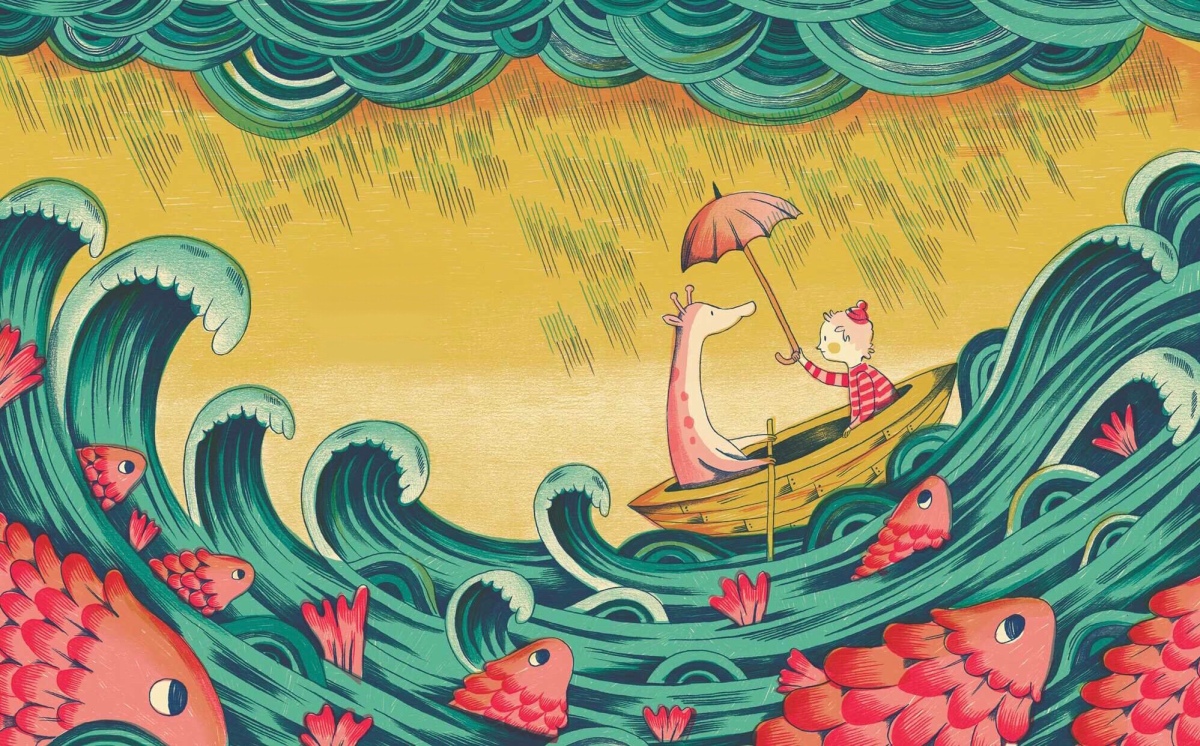
From Yellow Kayak by Nina Laden & Melissa Castrillon. Simon & Schuster, 2018
I’m very interested to see what Australia’s stats are like, as recent as possible, because when I walk into my local bookshops – especially the wonderful Fullers Bookshop – the wealth and breadth of picture books available will make you feel born again. They have the most beautiful, artful books, ones that are like works of art, as well as humorous, or exploring mental health issues, or what it means to belong, or what ‘family’ means, as well as the environment and so on. And that’s just the fiction.

Macmillan, 2018
The children’s novel section is a mix of three main genres: fantasy; historical (especially WWII); and realism – including the (often illustrated) comedy books that my son still loves. Meanwhile, YA has come a long way from white-washing book covers, and while fantasy, mystery and romance are clearly still the most popular genres, there are more stories featuring African heroines, and strong young women in general. I’d be worried about the popularity of Colleen Hoover’s books amongst older teens, but they are becoming very savvy to toxic relationships and I’ve come across good critical readings.
Where to from here? I agree with the Annabel Barker (Australian Writers’ Centre Team, 2020) that graphic novels will continue to gain in popularity – Heartstopper is only the beginning, I’m sure. What I would like is more Aboriginal and Torres Strait Islander voices published, and I hope the future of children’s literature in Australia continues to move away from its conservative past.
When I’m feeling optimistic, I believe that at some point, the obsession with smart phones and social media, and with always being on, will die down – it can leave you feeling as empty, gross and sad as eating greasy fast food, after all – and books will continue to respond to what’s happening in the world with increasingly edgier, gritty stories that make your imagination spin, your heart beat harder, and open your eyes to the world. You can’t get that from a screen.
References:
Australian Writers’ Centre Team. (2020, July 17). 7 trends in children’s and YA publishing. AWC: Australian Writers’ Centre.
Short, K. (2018). What’s trending in children’s literature and why it matters. Language Arts, 95(5), 287-298.



Leave a Reply