
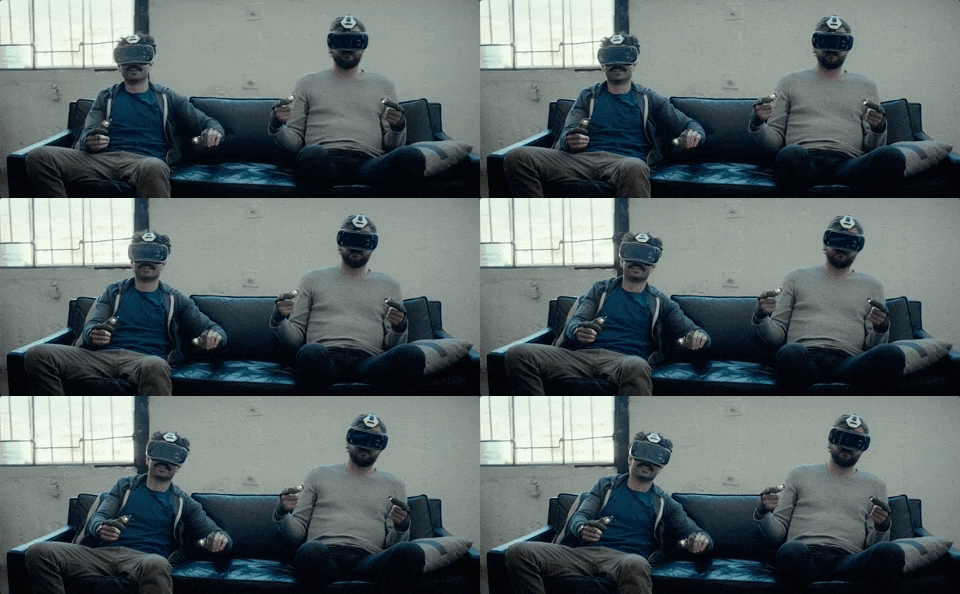
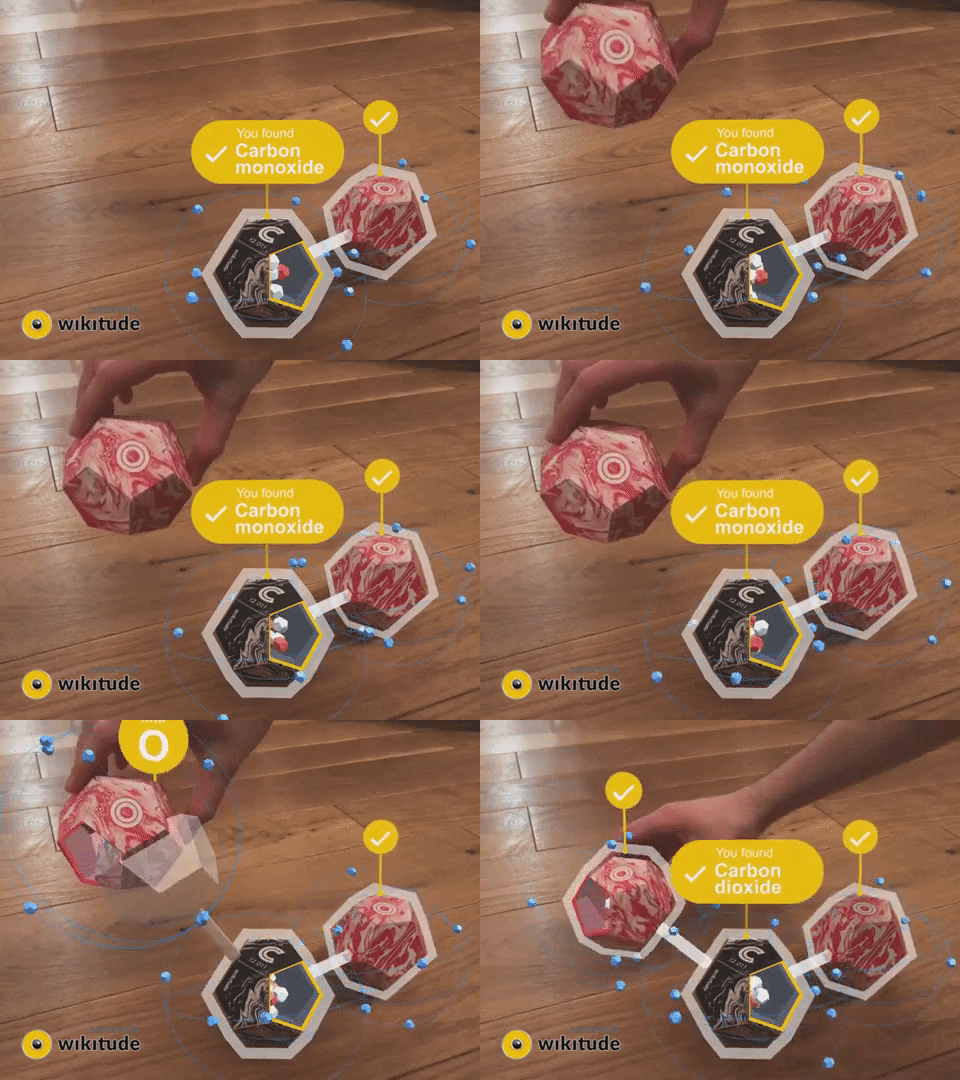
Virtual and augmented reality (VR and AR respectively, or VAR) is another subject I have learnt about previously, so I do have some interest and excitement about it. Hannah et al (2019, p. 1) defines VR as being used to create an environment, “allowing users to explore entirely simulated worlds through headsets, which translate software into immersive worlds”, while AR “superimposes computer-generated images onto views of the real world”.
VR:
AR:
There is a lot of speculation on whether VAR will succeed where other new, exciting technologies have failed. Cost, cumbersome devices and setups, and incompatibility between gaming platforms (PlayStation and Xbox games will not work on the opposite brand’s VR) are some reasons why VR hasn’t been an astronomical hit (Yan & Webb, 2018). However there are some truly great benefits to VR and AR, particularly in the medical industry.
In the article “Virtual reality: A survey of use at an Academic library” (Frost et al, 2020), the benefits of VR in universities are discussed, notably in the medical field. Students can practice virtually before attempting surgery on a real person. They can also learn empathy by being put in the place of their patients (p. 2). New research is showing growing evidence of VR reducing acute pain during hand therapy for burns victims by providing a stimulating distraction (Hoffman et al, 2020, p. 255).
There are both advantages and disadvantages to using VAR in library settings. Most advantages relate to university settings, such as partnering with faculties to develop content for their classes and also to develop tools related to their respective disciplines (Pope, 2018, p. 10). Public library installations of VAR are mostly for the purpose of showcasing new technologies to the public, either to prospective buyers or to the simply curious (Varnum, 2019, pp. 101-102), however there are some workplace applications such as librarians using AR to see which books are out of order on the shelves. Local gaming communities have had enthusiastic responses to VAR in public and university libraries, with clubs forming in response to the VAR equipment (Pope, 2018, p. 9).
Major disadvantages to VAR relate to access, privacy and security. The collection of user data leads to legal and ethical problems and the risk of data breaches (Varnum, 2019, p. 104). If a customer requires books about a sensitive medical issue, their personal privacy is at risk if the application being used by the library is hacked. There is also the possibility of unduly offending customers with a technology like AR that suggests other resources as you walk among the shelves. Parents may not want their children recommended “The Joy of Sex” while they wander the shelves looking for the section on animals. While VAR has great potential for libraries, the development of applications and programs will need to address such concerns before they are implemented on a broad scale.
Frost, M., Goates, M. C., Cheng, S., & Johnston, J. (2020). Virtual Reality. Information Technology and Libraries, 39(1).
Hannah, M., Huber, S., & Matei, S. A. (2019). Collecting virtual and augmented reality in the twenty-first century library. Collection Management, 44(2-4), 277-295. doi:10.1080/01462679.2019.1587673
Hoffman, H. G., Boe, D. A., Rombokas, E., Khadra, C., LeMay, S., Meyer, W. J., Patterson, S., Ballesteros, A., & Pitt, S. W. (2020). Virtual reality hand therapy: A new tool for nonopioid analgesia for acute procedural pain, hand rehabilitation, and VR embodiment therapy for phantom limb pain. Journal of Hand Therapy, 33(2), 254-262.
Pope. H. (2018). Virtual and Augmented Reality: Creating special spaces within the library. American Library Association, 49(9-10), 1-30.
Varnum, K. J. (2019). Beyond reality: Augmented, Virtual, and Mixed Reality in the library. American Library Association.
Yan, M., & Webb, K. (2018). Here’s why virtual reality still hasn’t taken off, despite being around for nearly 2 decades. Business Insider Australia. https://www.businessinsider.com.au/reason-virtual-reality-hasnt-taken-off-future-technology-2018-11?r=US&IR=T
2 thoughts on “Module 3: OLJ Task 6 – Virtual and Augmented Reality”
I found it very interesting to read your opinions of VAR in library settings. I am so used to only focusing on how VAR can benefit a library and had not yet really explored the potential issues that could come with them. You have really opened my eyes to issues of personal privacy in the event of a library being hacked, it was something I had not even considered as it sounds so strange to think of! Thank you for providing me with something new to think about that is very important when implementing VAR in libraries, your use of many informative references has given me a place to start to further educate myself.
Leticia Wishart
Love the way you cover the definitions of AR and VR!
Naomi