
Assessment Task, ETL504

Reflecting on the teacher librarian as leader

ETL504 ~ Teacher Librarian as Leader: Assessment 2 Part B
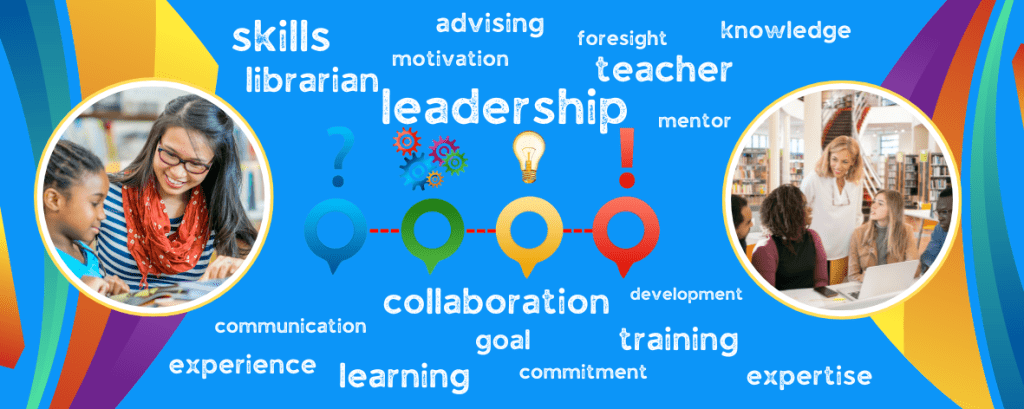
The teacher librarian (TL) role is complex and challenging to understand and encompasses far more than I first envisaged. In my introductory forum post (Foyel, 2023, February 21) I  identified the TL as being an advocate for the school library; promoting the role and a culture of reading within the school setting. This subject has provided opportunities for me to reflect on the TL role as one of leadership, collaboration, and professional learning; where strategic planning and leadership theory helped me to identify the type of leader I aspire to be.

I began by analysing what a leader is and how they positively influence others to achieve specific outcomes. In an earlier blog (Foyel, 2023, March 3), I reflected on inspirational leaders and educators whom I have worked with and the qualities that positioned them as effective leaders. I began to correlate those attributes with the TL role and the idea of leading from the middle. I challenged myself to ask how I might lead from the middle more effectively to become a change agent to influence the future of the school community (Farrell, 2014).

In contrast, I reflected on a totalitarian approach to leadership as I related to a discussion forum post by Gaskell (2023, February 20).  We discussed a principal’s style of leadership that lead to staff feeling undervalued, something that I have personally experienced. I contemplated how being a good leader is not always easy, and the responsibility to initiate positive change, recognise current trends, and influence school leadership are skills that need to be learned and valued collectively (Smith, 2016). Leading change is a part of the TL role, as is dealing with conflict at times. Module 3.2 was an important part of my learning and came at an opportune time. I was experiencing a situation of personal conflict and I knew this meant having a difficult conversation with my principal. Plocharczyk’s (2013) reading provided me with some practical solutions to overcome this conflict in a timely, professional, and appropriate manner; utilising clear communication skills towards a mutually agreed resolution.

I further examined how the TL could respond to becoming a driver of change and respond to structural, cultural, and societal influences. Robinson (2010) presented his perspective on changing an educational paradigm and I concluded that the TL can be a leader of change through the school library program (Foyel, 2023, March 7). However, I have come to understand that the TL is uniquely positioned to take on many leadership responsibilities of teaching and learning and their leadership style can be crucial in determining their philosophy, practice, and vision (Smith, 2016).

I began my role as TL by gaining the trust and respect of the library users; working collaboratively with teachers and building positive relationships with students. What I do in my role typifies the characteristics of a servant leader (Crippen & Willows, 2019); one who is focussed on the people I serve to promote:

  • actively listening to the needs of teachers and students by providing quality resources to support the curriculum or reading interests,
  • having the foresight to support teachers in their current class programs by supplementing their goals within the library program,
  • and committing to growth and community building through special events to strengthen relationships beyond the school library.

I aspire to be future-focussed in the TL role, a crucial part of the leadership approaches that I have discussed previously (Foyel, 2023, March 18). An instructional leadership approach may assist in this goal; a learning-centred model, focussed on the direction in which the school will take (Bush & Glover, 2014). Adapting to 21st-century learners the TL is a lifelong learner; where fitting into more than one leadership style ensures we are positive cultural change agents. Whatever the approach, my ‘lead-from-the-middle’ position must look towards the future by evolving with a shared vision for future goals (JISC, 2012) and a clearly defined vision statement that is aligned with the school’s Strategic Plan.


References

Bush, T & Glover, D. (2014). School leadership models: What do we know? School Leadership and Management, 34(5), 533-557. https://doi.org/10.1080/13632434.2014.928680

Crippen, C & Willows, J. (2019). Connecting teacher leadership and servant leadership” A synergistic partnership. Journal of Leadership Education, 18(2), 171-180. https://journalofleadershiped.org/jole_articles/connecting-teacher-leadership-and-servant-leadership-a-synergistic-partnership/

Farrell, M. (2014). Leading from the middle. Journal of Library Administration, 54(8), 691-699.  https:doi.org/10.1080/01930826.2014.965099

JISC. (2012). Defining and articulating your vision, mission and valueshttps://www.jisc.ac.uk/full-guide/vision-mission-and-values

Plocharczyk, L. (2013). Managing conflict and incivility in academic libraries. In K.  Blessinger & P.  Hrycaj (Eds.), Workplace culture in academic libraries (pp. 307-319). Elsevier. https://ebookcentral.proquest.com/lib/csuau/reader.action?docID=1574989&ppg=336

Robinson, K. [RSA]. (2010, October 14). RSA Animate: Changing education paradigms [Video]. YouTube. https://www.youtube.com/watch?v=zDZFcDGpL4U

Smith, B. (2016). The role of leadership style in creating a great school. SELU Research Review Journal, 1(1), 65-78. https://selu.usask.ca/documents/research-and-publications/srrj/SRRJ-1-1-Smith.pdf


Assessment Task, ETL402, Master of Education (Teacher Librarianship)

Making Connections on a Quest to Find the Hidden Gem

ETL 402: Literature Across the Curriculum

ASSESSMENT 2 – Reflective Blog Post

Being immersed in a book is both thrilling and captivating. We all want a book to envelop us and experience it from within – as teacher-librarians our mission is to find these hidden gems and ensure our students are captivated too. My hope was ETL402 would reveal the secret to finding the right book for the right reader to engage children in literature across the curriculum, promote enquiry, and contextualise learning (Waugh, et al, 2016).

Defining children’s literature was the first step along this quest. I identified with Em Sze’s (2022, November 8) viewpoint of children’s books being timeless and suitable for adults. Something I look for when choosing a book to read to children. Some students perceive picture books as texts for younger readers. I argue that the audience is fluid because authors must engage adults too in order to share with children (Foyel, November 22). Bringing this into my own practice in the library, I reshelved senior picture books separately. This change encouraged some reluctant readers (generally in Stage 3) to value picture books once again, without feeling disenchanted or judged by their choice of format. Importantly, the enthusiasm and impact of teacher-librarians and the vital role they play in influencing students to read for enjoyment should never be underestimated (Gagen-Sprigs, 2020).

Making connections with text is vital and thinking beyond the written narrative is certainly one element that is not identified in most definitions of children’s literature (Foyel, November 23), though important for identifying new understandings (Buckley, November 11). I learnt that connections to text and reading for pleasure may be the key to academic success, an important part of empowering readers to develop critical literacy skills (Turner, 2014). Supported by numerous studies (Foyel, 2022, November 20), reading for pleasure has many positive implications for student academic success (National Library of New Zealand, n.d).

Examining the most influential books from my childhood, elements such as compelling characters, rich imagery and tension-building, influence the text choices I make for read-alouds (Foyel, 2022, November 26). This encouraged me to question how authentic sharing helps students to understand a complex world (Goldstone, 2001/2001). I recognised that sharing a book with a child is a ritualistic, bonding time (Gaiman, 2013) to delve into morals, and messages, or to simply enjoy (Foyel, 2022, November 20).

Although children are first influenced by adults’ selections, when they begin to self-select, children become the drivers of change (Foyel, 2022, November 20). I learnt that new trends in children’s literature are influenced by many things, including societal changes and the digital age (Foyel, 2022, December 23). Despite being inspired to have my students respond to literature using technology, by creating book trailers (Balafoutis, 2023 January 7), digital literature remains a challenge for me. I perceived a lack of emotional bonding and connection with students when engaging in these texts (Foyel, December 27), until I discovered the augmented reality book Between Worlds (Adam Savage’s Tested, 2016). I immediately bought a copy and became excited about the possibilities for teaching and learning with this emerging technology, I began to look at digital forms through a new lens (Yokota & Teale, 2014) and now wonder what the future holds for children’s literature as I continue my journey into the future.

GEM FOUND (though the quest continues)!


References

Adam Savage’s Tested. (2016, October 26). Between worlds: Augmented reality in storytelling [Video]. YouTube. https://youtu.be/YO1E7DBuqtc

Gagen-Spriggs, K. (2020). An Investigation into the Reasons Students Read for Pleasure. School Libraries Worldwide26(1), 110–123.

Gaiman, N. (2013, Oct 16). Why our futures depend on libraries, reading, and imagination. The Guardian. (Australian Edition). http://www.theguardian.com/books/2013/oct/15/neil-gaiman-future-libraries-reading-daydreaming

Goldstone (2001/2002) Whaz up with our books? Changing picture book codes and teaching implications. Reading Teacher, 55(4), 362-370.

National Library of New Zealand. (n.d.). Reading for pleasure: A door to success. Services to Schools. https://natlib.govt.nz/schools/reading-engagement/understanding-reading-engagement/reading-for-pleasure-a-door-to-success

Turner, C. (2014). Opening the portal: an exploration of the use of postmodern picture books to develop critical literacy and contribute to learning in the Australian Curriculum: English. Literacy Learning: The Middle Years, 22(1) 52-61 https://search-informit-org.ezproxy.csu.edu.au/doi/10.3316/aeipt.201744

Waugh, D. Neaum, S., & Waugh, R. (2016). Childrens literature in primary schools. SAGE Publications.

Yokota, J. & Teale, W. H. (2014) Picture books and the digital world. The Reading Teacher, 67(8), 577-585. https://doi.org/10.1002/trtr.1262

Assessment Task, ETL533, Master of Education (Teacher Librarianship)

Assessment item 4 – Digital Storytelling and Reflection: Part D

Part D: Critical Reflection

The subject of Literature in Digital Environments has challenged my thinking about how students engage with digital resources. During the Covid-19 lockdown, libraries had to evolve and connect to their readers in new and innovative ways, which involved interacting online and expanding electronic resource collections (Garner et al., 2021).

Module 1 provided the opportunity to expand thoughts about trends in digital literature. Curtis (2022, July 22) made the point that many teachers continue to evaluate literature based on our preconceived ideology of it being text-based, while digital literature is far beyond this. Similarly, in my first blog post for ETL533 (Foyel, 2022a) it was noted that although digital literature can deepen understanding, careful consideration needs to be made in selecting useful forms of digital literature amongst the vastness of choice (Dobler, 2013). 

Interactive eBooks were featured early in my career (Foyel, 2022a), and was also noted (Foyel, 2022b) that digital texts afford new possibilities for reading and engaging with content (Lamb, 2011). McGeehan et al. (2018) entertained the idea that digital texts need to offer readers the opportunity to interact with the text, and educators seeking criteria to select quality digital literature. 

Frustration arose in Module 2 when asked to consider the challenges of using digital technology in the classroom. For some teachers, embracing change is the first challenge to overcome (Foyel, 2022c), though this is not my biggest concern. Time and resources to explore new resources is my greatest frustration, where infowhelm is often at the forefront of my overwhelm (Foyel, 2022d). 

Assessment 2 allowed time to explore different formats of digital literature. Though the quest to succinctly define what counts as a digital text continued. Wheeler (2022, August 8) aptly pointed out the frustration of defining an eBook vs a book app and Sargeant’s (2015) article helped to put into perspective that an eBook is read, while book apps are used. Undeniably, digital stories are not bound between pages, rather they offer features and experiences that cannot be provided by a print book (Yokota & Teale, 2014).  

Furthermore, storytelling has played an important role in history “to share knowledge, wisdom and values” (Malinta & Martin, 2010, p. 3061) and evolving over time into the digital realm (Combes, 2019). Storytelling is constant, though constantly changing. Fisher and Hitchcock (2022, p. 371) defined digital storytelling broadly as “using computer-based tools to tell stories”. Stackhouse (2013) discussed transmedia and the increasing ways to tell digital stories and gain access to others’ stories. Stackhouse (2013) noted that higher levels of engagement can be linked to making decisions within a story.

This idea of decision-making in a story initiated my ideas about my own storytelling project. After analysing the reading habits of Stage 3 students, there was an undeniable gravitational pull toward graphic novels. Moorefield-Lang and Gavin (2012) discerned the visual nature of digital graphic novels is preferable to the 21st Century reader. Canva was the creative platform of choice due to personal familiarity and having previously taught Stage 3 to use it. Project decisions were based on promoting maximum engagement while building creativity and digital literacy skills (Fisher & Hitchcock, 2022). With this in mind, a folktale was incorporated as Stage 3 enthusiastically engaged in this writing topic during 2022. 

Feedback was gained from road testing the resource with students and peers on my blog post, which was used to refine design choices. Curtis (2022, September 18) suggested adding interactivity elements, such as clicking an image to read a recipe. Interactivity was then included as comprehension tasks. Student feedback also instigated the ‘light bulb’ element to ensure students could locate the comprehension tasks. Facey (2022, August 29) proposed making the resource “real world” for students, this was incorporated into the comprehension tasks, giving the questions a 21st Century feel. 

Stage 3 student feedback was valuable, and adjustments were based on this. Some suggested more dialogue was needed and others wanted more coloured images. Additional dialogue was inserted to help students understand the story and the layout was reordered to ensure the story could be followed. Colour vs black and white images represent “good” vs “bad” characters and was not changed. Overall, student feedback was extremely positive, students were engaged and excited to participate further (Foyel, 2022e).

Future developments may include a read-to-me option, to support students of low ability or from non-English speaking backgrounds. Barnett’s (2022, September 16) comment inspired this idea, where she pointed out that research by Yang et al. (2022) suggests “oral development and creativity skills in non-English speakers benefit from constructing meaning through digital storytelling in English” (2022, para. 2).

This subject has inspired creativity and compelled me to consider the vast formats of digital resources in a new way, though continuing to critically analyse them to ensure they are integral to students’ learning and growth as we “cannot predict what the future will hold” (Yokota & Teale, 2014, p. 585).


References (Part D)

Anonymous. (2022). Module 4.1. Understanding the value of digital storytelling. ETL533, Interact 2. https://interact2.csu.edu.au/webapps/blackboard/execute/displayLearningUnit?course_id=_64104_1&content_id=_5128719_1 

Barnett, C. (2022, September 16). I have no doubt that your Stage 3 students will be completely absorbed in this unit of work! [Comment on “Digital storytelling proposal]. Mastering Librarianship. https://thinkspace.csu.edu.au/librarianlouise/2022/08/28/digital-storytelling-proposal/comment-page-1/#comment-13 

Combes, B. (2019). Digital Literacy: A New Flavour of Literacy or Something Different?. Synergy, 14(1). https://www.slav.vic.edu.au/index.php/Synergy/article/view/v14120163 

Curtis, J. (2022, July 22) If we redefine ‘literature’, do we need to redefine ‘reading’?. [Forum post]. ETL533, Interact 2.  https://interact2.csu.edu.au/webapps/discussionboard/do/message?action=list_messages&course_id=_64104_1&nav=discussion_board_entry&conf_id=_128305_1&forum_id=_282785_1&message_id=_4149565_1 

Curtis, J. (2022, September 18). Firstly, I wholeheartedly agree with your observation about graphic novels soaring popularity. [Comment on “Digital storytelling proposal]. Mastering Librarianship. https://thinkspace.csu.edu.au/librarianlouise/2022/08/28/digital-storytelling-proposal/comment-page-1/#comment-14 

Dobler, E. (2013). Looking beyond the screen: evaluating the quality of digital books. Reading Today, 30(5), 20 – 21. 

Facey, A. (2022, August 29). I love that you are also going to use Canva as a means of producing digital work. [Comment on “Digital storytelling proposal]. Mastering Librarianship. https://thinkspace.csu.edu.au/librarianlouise/2022/08/28/digital-storytelling-proposal/comment-page-1/#comment-8 

Fisher, C. M., & Hitchcock, L. I. (2022). Enhancing Student Learning and Engagement Using Digital Stories. Journal of Teaching in Social Work, 42(4), 371–391. https://doi.org/10.1080/08841233.2022.2113492 

Foyel, L. (2022a, July 24). When is a book not a book? Mastering Librarianship. https://thinkspace.csu.edu.au/librarianlouise/2022/07/24/when-is-a-book-not-a-book/ 

Foyel, L. (2022b, August 21). Critical reflection of digital literature experiences. Mastering Librarianship. https://thinkspace.csu.edu.au/librarianlouise/2022/08/21/critical-reflection-of-digital-literature-experiences/

Foyel, L. (2022c, August, 8). 24 years of change. [Forum post]. ETL533, Interact 2. https://interact2.csu.edu.au/webapps/discussionboard/do/message?action=list_messages&course_id=_64104_1&nav=discussion_board_entry&conf_id=_128305_1&forum_id=_282786_1&message_id=_4177475_1 

Foyel, L. (2022d, August 13). Consumer challenges. [Forum post]. ETL533, Interact 2. https://interact2.csu.edu.au/webapps/discussionboard/do/message?action=list_messages&course_id=_64104_1&nav=discussion_board_entry&conf_id=_128305_1&forum_id=_282787_1&message_id=_4190067_1 

Foyel, L. (2022e, October 2). Creating a digital story – Feedback. [Forum post]. ETL533, Interact 2. https://interact2.csu.edu.au/webapps/discussionboard/do/message?action=list_messages&course_id=_64104_1&nav=discussion_board_entry&conf_id=_128305_1&forum_id=_282779_1&message_id=_4249218_1 

Garner, J., Hider, P., Jamali, H. R., Lymn, J., Mansourian, Y., Randell-Moon, H., & Wakeling, S. (2021). “Steady Ships” in the COVID-19 Crisis: Australian Public Library Responses to the Pandemic. Journal of the Australian Library and Information Association, 70(2), 102–124. https://doi.org/10.1080/24750158.2021.1901329 

Lamb, A. (2011). Reading redefined for a transmedia universe. Learning and Leading with Technology, 39(3), 12-17.  http://ezproxy.csu.edu.au/login?url=http://search.ebscohost.com/login.aspx?direct=true&db=ehh&AN=67371172&site=ehost-live

Malinta, L. and Martin, C. (2010). Digital storytelling as a web passport to success in the 21st Century. Science Direct. Procedia – Social and Behavioral Sciences, 2(2), 3060-3064. https://doi.org/10.1016/j.sbspro.2010.03.465 

McGeehan, C., Chambers, S., & Nowakowski, J. (2018). Just because it’s digital, doesn’t mean it’s good: Evaluating digital picture books. Journal of Digital Learning in Teacher Education, 34(2), 58-70. https://doi.org/10.1080/21532974.2017.139948  

Moorefield-Lang, H. and Gavigan, K. (2012) These aren’t your father’s funny papers: The new world of digital graphic novels. Knowledge Quest,  40(3), 30-42. https://web-s-ebscohost-com.ezproxy.csu.edu.au/ehost/pdfviewer/pdfviewer?vid=1&sid=283419e7-3319-4e52-9b5a-61c67de16080%40redis 

Sargeant, B. (2015, February 6). What is an ebook? What is a book app? And why should we care? An analysis of contemporary digital picture books. Children’s Literature in Education, 46(4), 454-466. https://doi.org/10.1007/s10583-015-9243-5 

Stackhouse, A. (2013, May 22). Blurring the lines: Storytelling in a digital world. [Video]. TEDx Talks. YouTube. https://youtu.be/9c0bEZS1jC4 

Wheeler, A. (2022. August 18). eBook vs book app. [Forum post]. ETL533, Interact 2. https://interact2.csu.edu.au/webapps/discussionboard/do/message?action=list_messages&course_id=_64104_1&nav=discussion_board_entry&conf_id=_128305_1&forum_id=_282788_1&message_id=_4195924_1 

Yang, Y. T. C., Chen. Y. C., & Hung, H. T. (2022). Digital storytelling as an interdisciplinary project to improve students’ English speaking and creative thinking. Computer Assisted Language Learning, 35(4), 840-862. https://doi.org/10.1080/09588221.2020.1750431

Yokota, J., & Teale, W. (2014). Picture books and the digital world. The Reading Teacher, 67(8), 577-585. https://doi.org/10.1002/trtr.1262

Assessment Task, ETL533, Master of Education (Teacher Librarianship)

Critical Reflection of Digital Literature Experiences

ETL533 – Assessment 2: PART B: Literature in Digital Environments


What makes a good digital text, what counts as one, and what purpose do digital texts serve? 

To determine what makes a good digital text, we first must define what a digital text actually is. The changing landscape of reading is why we need to define a digital text as it affords so many new possibilities for reading and engaging with content in the electronic environment (Lamb, 2011). According to the NSW English K-10 Syllabus (2012), a digital text is “audio, visual or multimodal texts produced through digital or electronic technology which may be interactive and include animations and/or hyperlinks.” But how do we determine if the digital is quality in the abundance of choices? Interacting with the text in order to support reading and enhance enjoyment is the ideal design (McGeehan et al., 2018, p. 58). But the affordances that are offered by way of choice, one needs to be careful to consider and examine the content and what the text has to offer in the way of features, understanding,  and experiences that can be offered beyond what the print book can (Yokota & Teale, 2014) as well as the “literary worthiness of the text” (Dobler, 2013). With such an abundance of digital text at our fingertips, available on multiple devices, the decisions we make when choosing a digital text for learning become more and more important (Leu et al., 2015), and in addition to the quality, a sound set of criteria to evaluate effectiveness and comprehension is also necessary (McGeehan, 2018).


Compare your experience of reading digital texts with reading print. 

Reading for enjoyment has always been at the core of my being. Being read to as a child was a joyous occasion by my animated mother and as an adult constantly on the search for my next book to fall in love with. Though I read more online now than I ever did, having gone back to studying, Jabr (2013) aptly honed in on my sentiments in favour of printed books in his findings on paper versus digital texts. It is no wonder I prefer this method, as our brain interprets and responds differently to written language on screen when compared to on paper (Jabr, 2013). Like Jabr’s findings (2013) I too find I lose my place when scrolling through seemingly endless words on a screen as the text cannot be viewed in its entirety. The physical aspects are also more taxing (Jabr, 2013), and I have had to resort to wearing glasses due to eye strain from reading online and constant headaches. Yokota and Teale’s findings (2014), suggest both digital and print-based texts play an important role, something I consider when transferring this into my teaching role. I enjoy the occasional YouTube clip as part of the modules, to break up the monotony of readings. Being online has made access to readings much easier than my first stint at university when I had to physically go into the library and use microfiche to find journal articles (now that’s showing my age!). 


Choose the digital text you most enjoyed and discuss how you might incorporate it into a program at your institution.

The last grade I taught before moving into the library was Year 6. I loved taking them to Canberra for their annual Year 6 camp and going to the Australian War Memorial was a highlight. Life during WW1 is incomprehensible for 11 and 12 year olds, so to bring to life some of the hardships we would look at archives of images, letters, and radio broadcasted sound recordings. Life in the trenches was a small aspect of all of this, but when visiting Canberra the experience would become far more meaningful and emotive. 

BBC Bitesize’s image (2022) that I reviewed was similar to one I had used, though the previous one only offered text links to the images. BBC Bitesize’s (2022) image activity was superior in incorporating sound recordings, photographs, and informative text. Disappointingly, I discovered the sound recorded feature was only available to UK residents. Upon completion of my review, I sought alternative digital texts using the same image. Brown’s (n.d.) presentation on Blendspace, is a collection of digital content on one page. Mendivil’s (2019) Prezi presentation interacted with the image similarly to my original post, where hyperlinked portions of the image produced informative text and photographs from the time. As a teacher librarian, I would be interested to use these resources with Year 6 to support and extend their learning in the classroom, by having them create their own digital text using Prezi, Canva, or similar and present it to the class. Their creativity is astounding and their enthusiasm in presenting information in a new way, and transferring what they have learned to their visit to the Australian War Memorial is invaluable learning.


References

BBC Bitesize. (2022). KS2 What was life like in a World War One trench? BBC. https://www.bbc.co.uk/bitesize/topics/zqhyb9q/articles/z8sssbk Brown, J. (n.d.). World War 1 trench warfare. Blendspace.   https://www.blendspace.com/lessons/c-Wm64x_n5iKzw/world-war-1-trench-warfare-by-jamie-brown 

Dobler, E. (2013, April/May). Looking beyond the screen: Evaluating the quality of digital books. Reading Today, 30(5), 20-21. https://web-s-ebscohost-com.ezproxy.csu.edu.au/ehost/pdfviewer/pdfviewer?vid=1&sid=f1a0d0fa-45d0-46c2-8871-ec1f3871f561%40redis 

Jabr, F. (2013, April 11). The reading brain in the digital age: The science of paper versus screens. Scientific American. https://www.scientificamerican.com/article/reading-paper-screens/ Lamb, A. (2011). Reading redefined for a transmedia universe. Learning & leading with technology, 39(3), 12-17.

Lamb, A. (2011). Reading redefined for a transmedia universe. Learning and Leading with Technology, 39(3), 12-17.  http://ezproxy.csu.edu.au/login?url=http://search.ebscohost.com/login.aspx?direct=true&db=ehh&AN=67371172&site=ehost-live

Leu, D., Forzani, E., Timbrell, N., & Maykel, C. (2015, September). Seeing the forest, not the trees. Reading Teacher, 69(2), 139-145. https://doi.org/10.1002/trtr.1406 

McGeehan, C., Chambers, S. & Nowakowski, J. (2018). Just because it’s digital, doesn’t mean it’s good: evaluating digital picture books. Journal of Digital Learning in Teacher Education, 34(2), 58-70. https://doi.org/10.1080/21532974.2017.1399488  

Mendivil, M. (2019). WW1 trenches. Prezi. https://prezi.com/p/aaqfpmv7t2yc/ww1-trenches/ NSW Education Standards Authority. (2012). English K-10 Syllabus: Glossary. https://www.educationstandards.nsw.edu.au/wps/portal/nesa/k-10/learning-areas/english-year-10/english-k-10/glossary 

Yokota, J., & Teale, W. (2014). Picture books and the digital world. The Reading Teacher, 67(8), 577-585. https://doi.org/10.1002/trtr.1262 

Assessment Task, ETL533, Master of Education (Teacher Librarianship)

DIGITAL LITERATURE REVIEW 3

ETL533 – Literature in Digital Environments – Assessment 2: PART A

Review 3 – Stage 3: What things were in a WW1 trench?


informative
image 3.1 (BBC Bitesize. (2022). KS2 What was life like in a World War One trench? BBC.

BBC Bitesize provides resources to support students, parents, and teachers to learn, revise and teach children of ages 3 – 16+. The website supports all curriculum areas and units linked to the curriculum taught in England, Northern Ireland, Scotland, and Wales and is available in four languages. Many of these units are comparable to the NSW Education curriculum and the one that I have focussed on is a history unit about World War One. The KS2 (Year 5 and 6) history topic of World War One aligns with the NSW Education Stage 3 and 4 History content. 

I will be reviewing the interactive graphic Activity 1: What things were in a trench? (image  3.1).

This graphic can be found as a part of the non-fiction webpage Year 6 World War One, and the learner guide What was life like in a World War One trench? This digital graphic has a hypermedia multimodal format, recorded voice, images, and text to explore.  This activity portion of the webpage follows a variety of information sections about World War One trench life, with a quiz at the end consisting of five multiple choice questions to test your knowledge about the preceding information. 

This type of infographic, with multimodal hypertext and commentary, offers students a different way of thinking about the topic and extends their understanding of the text (Dalton, 2013, p. 649). With the popularity of graphic novels and manga genres, the appeal of this type of image-based learning and interaction with the text is another option for visual digital literacy with Stage Three students (Dalton, p. 648). 

There are ten different objects that can be highlighted individually and explored further (image 3.1). Each highlighted image can be clicked to reveal a combined recording of a British ‘soldier’s’ voice (image 3.2), followed by a black and white photograph from WW1 (image 3.3) and text describing the image (image 3.4).  

Each sound recording is of a first-person account and is under one minute to ensure full engagement (eg, Transcribed from BBC Bitesized (2022). Rats: “those rotten rats, we can’t get rid of them no matter how hard we try. I shot five of them the other day myself, no sooner were they gone, than ten more came running…”). 

informative
image 3.2 (Screenshots sourced from BBC Bitesize, 2022). Sound recording image of the WW1 soldier

informative
image 3.3 (Screenshots sourced from BBC Bitesize, 2022). WW1 photograph of British soldiers.

informative
image 3.4 (Screenshots sourced from BBC Bitesize, 2022). Informative text about the image.

The sound recordings were accessible via an iPhone (using Safari), though were  “not supported”  to play on my desktop computer via any platform.  I discovered that my IP address is the problem as it is not registered in the UK. This limits its use in Australian classrooms.

Following each sound recording is a still image, a black and white photograph from WW1 which clearly depicts the scene. 

Finally, textual information explains each image in an authentic and comprehensive manner, while expressed in appropriate and understandable language for the intended audience, children in years 5 and 6. Thus aligning with the NSW English syllabus outcomes for Stage 3, especially EN3-3A (NESA, 2021). 

Each image compels the reader to seek more information about the trenches, which can be found in other sections of this webpage. The reader has the opportunity to extend their knowledge about WW1 via the other learner guides on the topic of World War One. This multimodal hyperlinked infographic may also be a way to extend students’ knowledge about a topic. Using this infographic as a starting point to creating their own multimodal hyperlinked image, which could include their own voice recordings, additional information about the topic, and hyperlinks to other findings and would make a valuable assessment tool to evaluate their comprehension and continuing to develop their “interest and skill in analysing, critiquing, and responding to text” (Dalton, 2013, p. 649).


Resources

BBC Bitesize. (2022). KS2 What was life like in a World War One trench? BBC. https://www.bbc.co.uk/bitesize/topics/zqhyb9q/articles/z8sssbk 

Dalton, B. (2013). Engaging Children in Close Reading: Multimodal Commentaries and Illustration Remix. The Reading Teacher, 66(8), 642–649. https://doi.org/10.1002/trtr.1172 

NSW Education Standards Authority. (2021). Reading and viewing: Stage 3. https://educationstandards.nsw.edu.au/wps/portal/nesa/k-10/learning-areas/english-year-10/english-k-10/content/893 


Assessment Task, ETL533, Master of Education (Teacher Librarianship)

DIGITAL LITERATURE REVIEW 2

ETL533 – Literature in Digital Environments – Assessment 2: PART A

Review 2 – Stage 2: Roald Dahl Digital Escape Room 

decorative
image credit 

The phenomena of the escape room is relatively new, and the digital escape room even more so, especially within the context of the classroom (Taraldsen et al, 2022). Although game-based learning is not a new concept, it is a way to engage students in cooperative communication and be critical and active learners (Taraldsen et al, 2022). Being a relatively new framework for education, there is not a lot of research studies in this area (Taraldsen et al, 2022). However, Makri et al. (2021) have looked at Educational Escape Rooms and Digital Educational Escape Rooms (DEERs) in their study. 

I began a search for digital escape rooms as I recalled how much the children in Years 3 to 6 enjoyed the opportunity to engage in a new digital text during the Covid-19 lockdown. I came across a website that features a variety of digital escape rooms for kids and adults compiled onto one page. They are sorted into categories, many with educational themes, and for a variety of levels, and content suitable for family fun, teens, and adults. 

I was drawn to a family favourite, Roald Dahl, in the ‘Based on Books’ section. I have read and reread Roald Dahl’s books to my own children and many of my classes in Stages 1 and 2. I discovered that it had been created by Willoughby City Library in 2020, as an opportunity to connect children and their families to the public library and its services during the Covid-19 lockdown. It is recommended to open the digital escape room using a computer screen, rather than a mobile device for the best experience. It was created using Google Sites in honour of the 30th anniversary of the death of Roald Dahl. 

It requires the reader to be accomplished or have an adult present to help navigate the text and other features. To begin the experience simple navigation by clicking a ‘next’ button at the bottom of the page, and to advance in the story. Once the main ‘room’ is reached, the layout is a simple two-column webpage to present each ‘chapter’.

Each ‘chapter ‘represents a different Roald Dahl book and is characterised by an image from an Unsplash source (image 2.1). 

Chapter One  Chapter Two Chapter Three Chapter Four
informative informative informative informative
image 2.1 (all credits can be seen here, provided by Willoughby City Library, 2020).


There is an embedded Google Form in which the digital escape room story and puzzles are played out. Each image has hidden links, which are clues to answer the questions for each chapter. The clues open up in a new tab via Google Slides, Google Docs, Google Drive, or Google Sheets. The clues must be answered correctly, in all caps, with no spelling errors or accidental additional characters to advance. Each question has a required answer and begins as a red line, then changes to a blue line when answered correctly. Completing the first chapter opens chapter two and three questions, and completing these two opens chapter four questions. 

After becoming stuck on one question in the first chapter and another in the third chapter. I decided to seek assistance from the source. An email address on the introduction page proved most helpful. I contacted the library to request an answer sheet, for the purpose of my assessment and to support students for use in the classroom setting. Support was prompt and courteous and they were excited that a resource that was created quickly during the first sudden lockdown was still useful. 

It is assumed that you have knowledge of the Roald Dahl books prior, as the first question in each chapter asks you to look at the image to determine the title of the book represented. In addition to this, some questions also require knowledge of the characters or storyline to ensure that an answer can be achieved. 

The layout could be a challenge for some students and a suggested improvement would be aligning the chapter pictures with corresponding Google Form questions. At times the questions were quite vague and brief. Rewording the questions may be helpful in understanding what was being asked of each corresponding clue. Most of the clues were well placed though and children could be guided to determine a response. I could see how some students could also be easily discouraged if stuck on clues that required some deciphering using numbers and letters or knowledge of the original text. It would be critical for teachers to have the answers to ensure some level of success or support. 

DEERs are certainly an innovative way to combine digital skills, critical thinking, and teamwork in education and the online classroom, however, certain considerations need to be taken into account (Makri et al., 2021). Considerations include learning objectives, communicative and teamwork skills of participants, and ensuring students can navigate the experience to achieve success. DEERs may also be a tool for teachers to access understanding about a text read in class or another topic that they have been studying, though they would also need to incorporate a way to gather evidence of their learning such as follow-up polls, quiz scores, or comments on the platform (Makri et al., 2021).

Resources

Makri, A., Vlachopoulos, D., & Martina, R. A. (2021). Digital Escape Rooms as Innovative Pedagogical Tools in Education: A Systematic Literature Review. Sustainability (Basel, Switzerland), 13(8), 4587–. https://doi.org/10.3390/su13084587

Seymour Public Library. (n.d.). Escape rooms and games. https://seymourpubliclibrary.org/departments/escape-rooms/ 

Taraldsen, L. H., Haara, F. O., Lysne, M. S., Jensen, P. R., & Jenssen, E. S. (2022). A review on use of escape rooms in education – touching the void. Education Inquiry, 13(2), 169–184. https://doi.org/10.1080/20004508.2020.1860284

Willoughby City Library. (2020). Roald Dahl digital escape. April 22, 2020. https://sites.google.com/view/roalddahldigitalescape 


Assessment Task, ETL533, Master of Education (Teacher Librarianship)

DIGITAL LITERATURE REVIEW 1

ETL533 – Literature in Digital Environments – Assessment 2: PART A

Review 1 – Early Stage 1 and Stage 1: Dr. Seuss Deluxe Books app

decorative
Dr. Seuss Deluxe Books app thumbnail (Oceanhouse Media, 2022)


The more that you read,

The more things you will know. 

The more that you learn,

The more places you’ll go. (Dr. Seuss, 1978).

We all know and love Dr. Seuss’ books, and it is easy to become captivated by the verse, rhyming, rhythm, simple illustrations, and imaginative, recurring characters that have made a universal impact over many generations since the 1920s. The original Dr. Seuss books have been reproduced in a multitude of formats including paper, digital, films, television shows, stage productions, and mobile apps. 

For Early Stage One and Stage One I chose to look at apps for iPads, these are the device of choice in Kindergarten to Year 2 classrooms in my school setting. According to Dr. Goodwin (2012) in her study of iPad use in the classroom, there is emerging evidence of iPads being educational tools to support learning via the apps available, though research in this area is failing to keep pace with new technologies. Goodwin (2012, p. 11) also suggests that explicit criteria for app selection be developed to critically analyse their relevance.

I began my search on Google and came across the Oceanhouse Media website. They are a publisher of more than 650 apps for mobile, tablet, and computers. Their Dr. Seuss app was most appealing and linked with the current Dr. Suess borrowing trends in our school library. Their two main Dr. Seuss apps for iPhones, and iPads, offer unique features and can be compared HEREDr. Seuss Deluxe Books app was the most suitable for my setting. 

The app is free to download and offers one free enhanced digital book, Yertle the Turtle, with 16 others available. Each additional book is $5.99, with a recommended grade range of Kindergarten to Year 3. Finding the app through the website provided an opportunity for FREE teacher access to all 17 books via a promotional code. This code is one-time-use, obtained by using the online registration form and a school email address. As promised, the digital books were now available for me to download for free. A substantial saving of AUS$95.84 (as separate purchases), or at a cost of AUS$62.99 for the Read and Play bundle 40, or AUS$57.99 for the Read and Play 37 bundle. This allowed for a more thorough analysis of the app.

The app features an animated version of each book, the characters move simply but do not detract from the text. The settings (image 1.1) allow the reader or parent/teacher to set parameters for different reading modes and other features.

informative image
image 1.1 (image created by me using Canva and an app screenshot from Oceanhouse Media, 2022)

Let’s talk settings…

The reading modes:

  • Read to me – text is highlighted as each word is narrated (image 1.2). The reader taps an arrow to advance to the next page.
  • Read it myself – reader taps each word and is read aloud. After tapping each word a review arrow button appears for a text reread. The dynamic text layout could make reading words left to right challenging for emerging readers.
  • Auto play – plays the whole story automatically, with each read word highlighted. Play is continuous unless the stop button is held for 5 seconds. This feature was difficult to execute on an iPhone. When autoplay is stopped reading mode reverts to ‘read to me’. A good mode for nonreaders or emerging readers who would benefit from seeing text direction. The reader cannot go back to a previous page and cannot access the activities in this mode.
informative image
image 1.2 (image created by me using Canva and an app screenshot from Oceanhouse Media, 2022)

Other features:

  • Activities – It is unclear how to access the activities and took trial and error in the ‘read to me’ mode. Touching images on the page reveals a hidden star image that floats to the bottom right corner and can then be tapped to open the activity (image 1.3). Searching for the activity was a way to engage the reader, though could be a distraction, and locating the correct part of the image was occasionally difficult. Instructions for the activity are announced and repeated if idle. Activities are suitable for the intended grade and may include “spelling, sorting, rhyming, phonics, puzzles, memory, word search, sequence, and more” (Oceanhouse Media, 2022). 
  • Picture words – allows the reader to tap any picture and have a word pop out, narrated, and then disappear. A feature that helps to identify items on the page (image 1.4).
  • Music and Sound – When this feature is left on, it is distracting and the narration is not as clear.
informative image
image 1.3 (image created by me using Canva and an app screenshot from Oceanhouse Media, 2022)
informative image
image 1.4 (image created by me using Canva and an app screenshot from Oceanhouse Media, 2022)

Overall, this app is engaging and can be shared on multiple devices. Parents who download the app can track their child’s progress. The digital books can be viewed on the home page in a variety of ways, including A to Z, favourites, and grades. For this app to play an integral role we need to ensure that nostalgia isn’t getting in the way of knowing an app is appropriate (Yokata & Teale, 2014). Maintaining the aim of this app is not to teach reading, but to access reading in an interactive and engaging way. Undoubtedly this app is fun and entertaining, but in addition could also support student learning at home and in the classroom (Goodwin, 2012, p. 16).


Resources

Goodwin, K. (2012). Use of tablet technology in the classroom: Phase 1 iPad trial. NSW Curriculum and Learning Innovation Centre (CLIC). https://www.cirta.org/images/doc_archive/cirta_nouvelles/iPad_Evaluation_Sydney_Region.pdf 

Oceanhouse Media. (2021). Dr. Seuss Deluxe Books. (Version 1.0.7) [mobile app]. 

Oceanhouse Media. (2021). Dr. Seuss app features.  https://edu.oceanhousemedia.com/dr-seuss-treasury-and-dr-seuss-deluxe-book-app-comparison/ 

Seuss, Dr. (1978). I can read with my eyes shut! Random House.

Yokota, J., & Teale, W. (2014). Picture books and the digital world. The Reading Teacher, 67(8), 577-585. https://doi.org/10.1002/trtr.1262 

Assessment Task, ETL401, Master of Education (Teacher Librarianship)

Sentence first, verdict afterwards!

ETL401 – ASSESSMENT 3 – REFLECTIVE PRACTICE 

Down, down, down the rabbit hole she went. Curiouser and curiouser things became, but on and on she went, nevertheless. (Carroll, 1907/1985)

I delved headfirst into another world, one full of potential for future endeavours. My life changed and adapted to a new normal, immersed in new challenges and many “doors” of the teacher librarian (TL).

Was I drowning in a ‘pool of tears’ (Carroll, 1907/1985, p.20), where infowhelm flourished? I crawled into a warren of information about information. Reading upon reading and finally, when I crawled out, I realised that the light on the other side was illuminating my ideology of the role of the teacher librarian. It was Merga (2019) that had me question my initial thoughts about a teacher librarian being “marginalised” and not seen as “real teachers” (Foyel, 2021, February 21). My understandings about the TL role were narrow and took on the perception of a magical and fanciful job, flitting about in the calm and quiet of the library, tending to books and the students that ventured into the library. With a seemingly endless amount of time to organise resources and parades for the rest of the school (Foyel 2021, March 8).

So began the caucus race…module 2, this fast-paced information environment, where the TL is entangled and is required to stay current in this ever-changing world (Foyel, 2021 March 13). When did my view of the TL role begin to change? Well, it came with reading Webster’s Theories of Information Society (2014) where I began to view of the TL role in a broader sense, by examining his five non-mutually exclusive definitions of the information society; technological, economic, occupational, special, and cultural and the various roles that the TL has within these areas (Foyel, 2021, March 17).

Hutchinson (2017) also challenged my thinking about the information environment, where she showed how information literacy was at the centre of the curriculum, though overlaps with other terms, including academic literacies, new literacies, media literacies and digital literacies. Thus, moving away from the whimsical view of the TL role to one of information specialist and curriculum leader. Being ‘adaptive and innovative’ (Foyel, 2021, March 18, para. 3) and really understanding learners and their needs in this ever-changing world.

So, who are you? mused a caterpillar…(Carroll, 1907/1985). In module 3 I discovered the AITSL Standards. How did I not know about these? Was the role of the TL peripheral in my school like Merga (2019) pointed out earlier? I began to reflect on each standard and identified some future goals as a TL (Foyel, 2021, March 21) and how I might bring this to the attention of the leadership team in my current school setting. So where to from here? Well… I guess it “depends a good deal on where you want to get to,” sage advice from a cat I expect (Carroll, 1907/1985, p.75).

Thereafter, I began to investigate the “multifaceted and constantly evolving” (Foyel, 2021, March 27) role of the TL and how the perspective of the school principal could influence the value and attitudes held by the school in general. Like Lupton (2016), I concur that the TL role should be seen as a professional, collaborative, expert teacher first and librarian second (Foyel, 2021, March 27). When a positive rapport is established with the principal and staff, collaboration can become a “long term vision” (Senge, 2007, p.12, cited in Foyel, 2021, April 21).

So is this just a mad tea party? Like the White Rabbit, are we always out of time? (Carroll, 1907/1985). Teaching in the 21st Century is about finding the unique ways that the TL can support and collaborate with staff. Where students become critical and creative thinkers in this new paradigm (Foyel, 2021, April 19). Maybe the issue of time be overcome with a collaborative, constructivist approach (Foyel, 2021, April 29).

Module 5 unlocked a fascinating view of teaching curriculum collaboratively with a classroom teacher and incorporating inquiry learning via a guided inquiry (GI) model. I pondered various GI models and those best suited to my K-6 setting. I began with a list of criteria, key elements for selecting the most suitable model for enculturation. One that was current, relevant, and considered the audience and purpose. With a clear process, beginning with background knowledge, easily linked with the NSW Syllabus and General Capabilities. (Foyel, 2021, May 14).

So, with all the evidence in and considered, it seemed a verdict would ensue. It has certainly been a journey where I began at the beginning and went on until the end… “with the dream of Wonderland of long ago” (Carroll, 1907/1985).


References

Carroll, L. (1985). Alice’s Adventures in Wonderland. Chancellor Press. (Original work published 1907).

Hutchinson, E. (2017). Navigating the information landscape through collaboration. SCIS https://www.scisdata.com/connections/issue-101/navigating-the-information-landscape-through-collaboration/

Lupton, M. (2016). Adding value: Principals’ perceptions of the role of the teacher librarian. School. Libraries Worldwide. 22(1), 49-61 https://doi-org.ezproxy.csu.edu.au/10.14265.22.1.005

Merga, M. (2019). Librarians in schools as literacy educators: Advocates for reaching beyond the classroom. Springer International Publishing AG.

Senge, P. (2007). Chapter 1: Give me a lever long enough … and single-handed I can move the world. In The Jossey-Bass reader on educational leadership, 2nd ed. (pp.3-15), available CSU Library Reserve

Webster, F. (2014). Theories of the information society. 4th ed. Routledge, Taylor & Francis Group.


ETL401, Master of Education (Teacher Librarianship)

Information Literacy and the TL

ETL401 – Module 5.2

Reflective Practice

Your thoughts: Discussions of information literacy in this module are diverse and interesting.  In your journal (Thinkspace), reflect on what you can take from the discussion of information literacy to your TL role in school.

Information Literacy (IL) is a complex and multifaceted approach to teaching and learning. It can be seen as a set of skills, this behaviourist approach where skills are learnt or acquired or conversely,  as a sociocultural approach, a way of learning, collaboration and information exchange. Both viewpoints are correct, both have merit and both have their place in the teacher librarian role, it is primarily the context and purpose for which the participants define the information, because ultimately ‘people see teaching and learning differently’  (Bruce, Edwards and Lupton, 2007, p. 1) and secondly, ‘people see information literacy differently’ (p. 2).

So how does the complexity of IL transfer to the school library and to the teacher librarian role?

I think Kutner & Armstrong pose an important question in their journal article, a question I have often pondered myself as I take my K-6 classes for their 45 minute lesson each week,

“HOW DO LIBRARIANS AS PRACTITIONERS ENGAGE IN THIS EXPANDED NOTION OF INFORMATION LITERACY, GIVEN THE LIMITED TIME MOST HAVE WITH STUDENTS?” (p. 2)

The aspect of “limited time” spoke to me. By the time I bring in each class, settle them, go through the routines of welcoming, returning books and introducing the lesson or revising what we are to continue with, reading a text and then of course borrowing time and task completion…how do I ensure that quality teaching and learning is achieved? How do I ensure that the content stays relevant?

Therefore, I keep coming back to the notion of life-long learners. Not only being encouraging students to strive towards this but to be one myself, lead by example. To empower them to be engaged learners, critical thinkers, and have a connection with the information environment. As the TL on staff I try to lead the way for collaboration amongst staff, sharing a fundamental core set of values and enculturation of these ideals within the school context as a whole. Continuing to ask questions and seek answers and be future leaders.


References

Bruce, C., Edwards, C., & Lupton, M. (2006). Six frames for information literacy education: A conceptual framework for interpreting the relationships between theory and practice. Innovation in teaching and learning information and computer sciences, 5(1), 1-18. https://www.tandfonline.com/doi/full/10.11120/ital.2006.05010002

Kutner, L. & Armstrong, A. (2012). Rethinking information literacy in a globalised world. Communications in Information Literacy, 6(1), 24-33. CSU Library.