
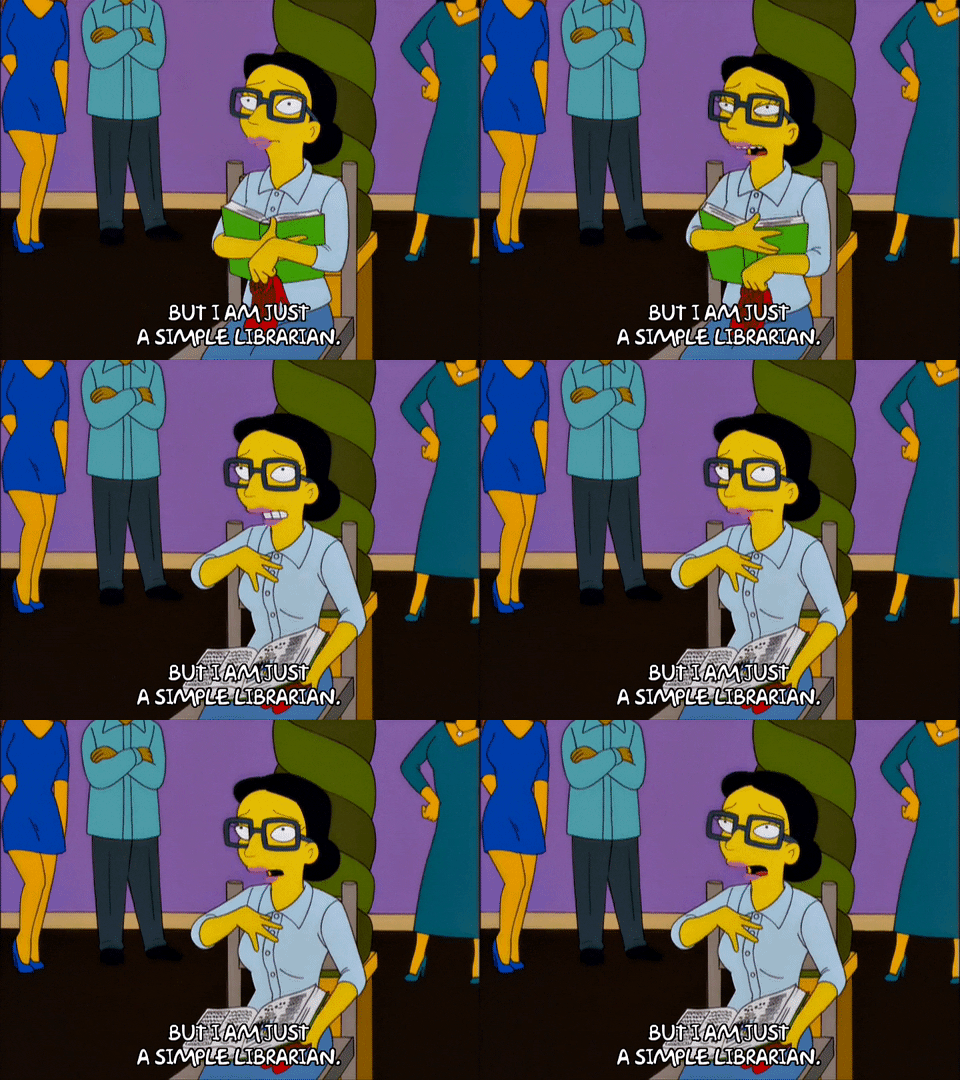
Librarian 2.0 is a concept that has been talked about since at least 2005 (Partridge et al., 2010). Many information professionals have shared what they think are the key skills, knowledge and attributes that are required by the Librarian 2.0 working in a Web 2.0 world. While the specifics have changed over the years, the themes of the core competencies have remained similar. Through research I have done as well as my own experience as a LIS student and working in an information organisation these are the essential knowledge, skills, and attributes I believe information professionals need in a Web 2.0 world, alongside the more traditional information skills.
- Technology: Technology is a field of rapid change and there is no need to be an expert in all aspects of it. Instead, Librarian 2.0 should aim to be comfortable with using technology and possess some degree of technology literacy – that is have a basic understanding of how it works so that you can select the right technology and use it appropriately (Mann, 2019). They should also be comfortable in learning and playing with new technologies. Technology requires Librarian 2.0 to be flexible, adaptive, and creative.
- Advocacy: Knowing how to advocate to stakeholders the value of your organisation is key in the modern society where information organisations of all sorts need to fight to either maintain or increase their funding (Schwartz, 2016). Advocacy is also about outreach and building awareness of the organisation within the community and providing the services they need. This requires Librarian 2.0 to have good communication skills so they can effectively sell their skills and knowledge or easily persuade people to their point of view (Partridge et al., 2010). They also need people skills to successfully interact with a wide range of people, including stakeholders, users, and colleagues.
- Collaboration/teamwork: In the Web 2.0 world, collaboration is not just between colleagues. Increasingly collaboration is between different types of information organisations, as well as different departments within an organisation. Partridge et al. (2010) notes “Librarian 2.0 must be able to build relationships … and establish networks with individuals and groups where it is needed … to be a team player and able to work collaboratively across disciplines” (p. 328). Ayinde and Kirkwood (2020) describe this as cross-cultural competency, the ability to work with diverse groups of people from a wide range of disciplines.
Finally, and most importantly, Librarian 2.0 must commit themselves to being a lifelong learner. The ever-changing nature of technology and the Web 2.0 world demands nothing less.
Ayinde, L., & Kirkwood, H. (2020). Rethinking the roles and skills of information professionals in the 4th industrial revolution. Business Information Review, 37(4), 142-153. https://doi.org/10.1177/0266382120968057
Mann, L. (2019). Information literacy and instruction: Making a place of makerspaces in information literacy. Reference and User Services Quarterly, 58(2), 82-86. https://doi.org/10.5860/rusq.58.2.6927
Partridge, H., Lee, J., & Munro, C. (2010). Becoming “librarian 2.0”: The skills, knowledge and attributes required by library and information professionals in a web 2.0 world (and beyond). Library Trends, 59(1), 315-335. https://www.muse.jhu.edu/article/407820
Schwartz, M. (2016). Careers: top skills for tomorrow’s librarians. Library Journal, 141(4), 1-5.
Hi. This is a great example of how to write an interesting post. Your research is really good, I like the way you have structured it and the information is spot on. This has shown me lots of thoughtful insights. Plus I love The Simpsons gif at the start!
Jane