A work breakdown structure (WBS) is a visual, hierarchical and deliverable-oriented deconstruction of a project. It is a helpful diagram for project managers because it allows them to break down their project scope and visualize all the tasks required to complete their projects.
All the steps of project work are outlined in the work breakdown structure chart, which makes it an essential project planning tool. Project managers use a WBS for many purposes, such as finding the critical path or creating a Gantt chart.
Project managers make use of project management software to lay out and execute a work breakdown structure. When used in combination with a Gantt chart that incorporates WBS levels and task hierarchies, project management software can be especially effective for planning, scheduling and executing projects.
ProjectManager is an online work management software with industry-leading project management tools like Gantt charts, kanban boards, sheets and more. Plan using WBS levels in our tool, then execute with your team via easy-to-use kanban boards and task lists. Try it for free today.
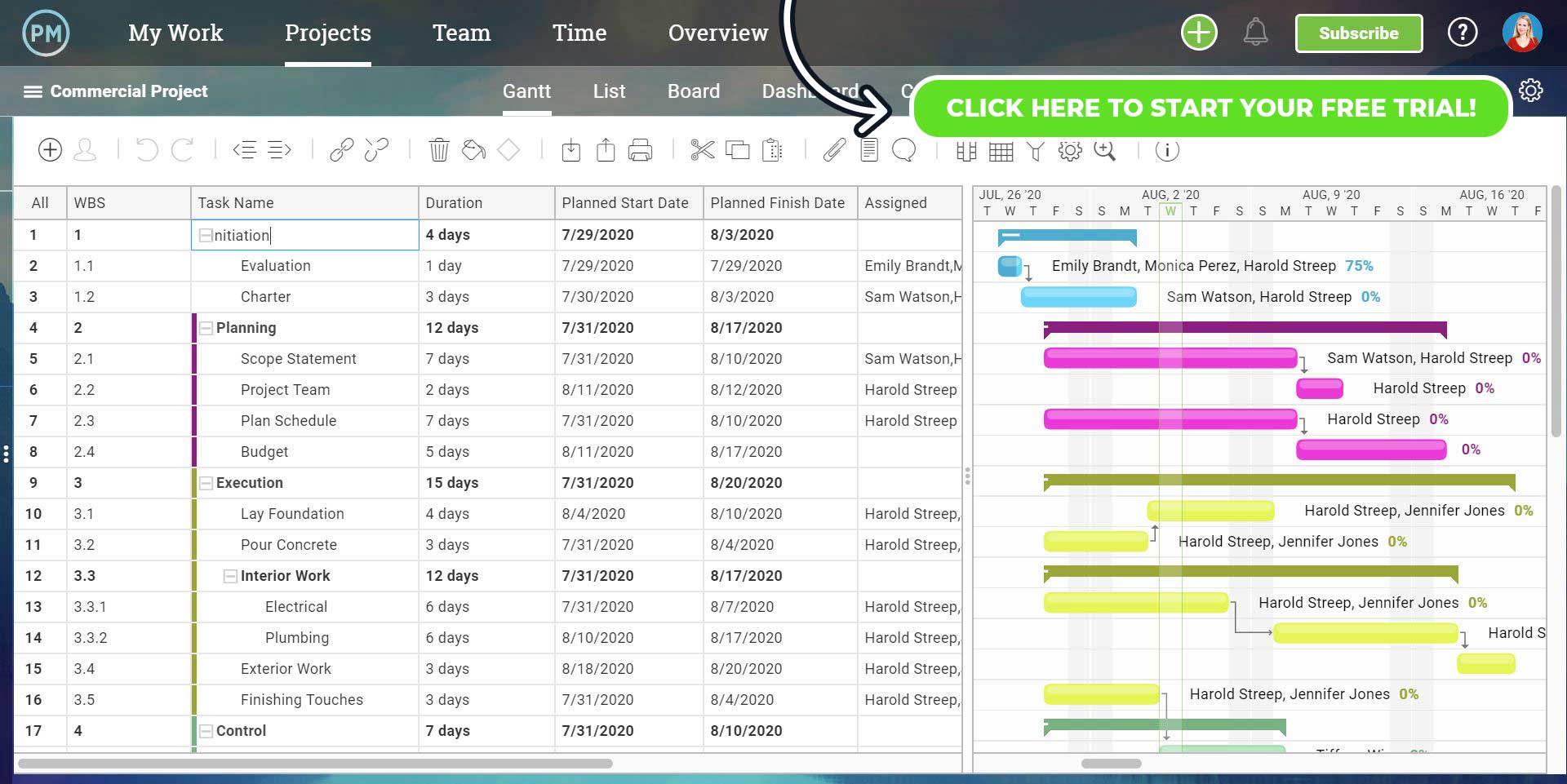
ProjectManager’s online Gantt charts feature a column for the WBS code—learn more
Why Use a WBS In Project Management?
Making a WBS is the first step in developing a project schedule. It defines all the work that needs to be completed (and in what order) to achieve the project goals and objectives. By visualizing your project in this manner, you can understand your project scope, and allocate resources for all your project tasks.
A well-constructed work breakdown structure helps with important project management process groups and knowledge areas such as:
- Project Planning, Project Scheduling and Project Budgeting
- Risk Management, Resource Management, Task Management and Team Management
In addition, a WBS helps avoid common project management issues such as missed deadlines, scope creep and cost overrun, among others.
In other words, a work breakdown structure serves as your map through complicated projects. Your project scope may include several phases, or smaller sub-projects—and even those sub-projects can be broken down into tasks, deliverables, and work packages! Your WBS can help you manage those items, and gain clarity into the details needed to accomplish every aspect of your project scope.
Work Breakdown Structure Example
Now that we’ve gone through the definition of a WBS and learned why they are a great project management tool, let’s take a look at a work breakdown structure example.
The final project deliverable, as well as the tasks and work packages associated with it rest on top of the WBS diagram, and the WBS levels below subdivide the project scope to indicate the tasks, deliverables and work packages that are needed to complete the project from start to finish.
For our WBS example, we’ll be creating a work breakdown structure to guide a commercial building construction project. This is potentially a complex project, but a WBS chart will take that complexity and boil the project scope down to simpler tasks to make the project manageable.
Study the phase-based work breakdown structure example of a construction project below:
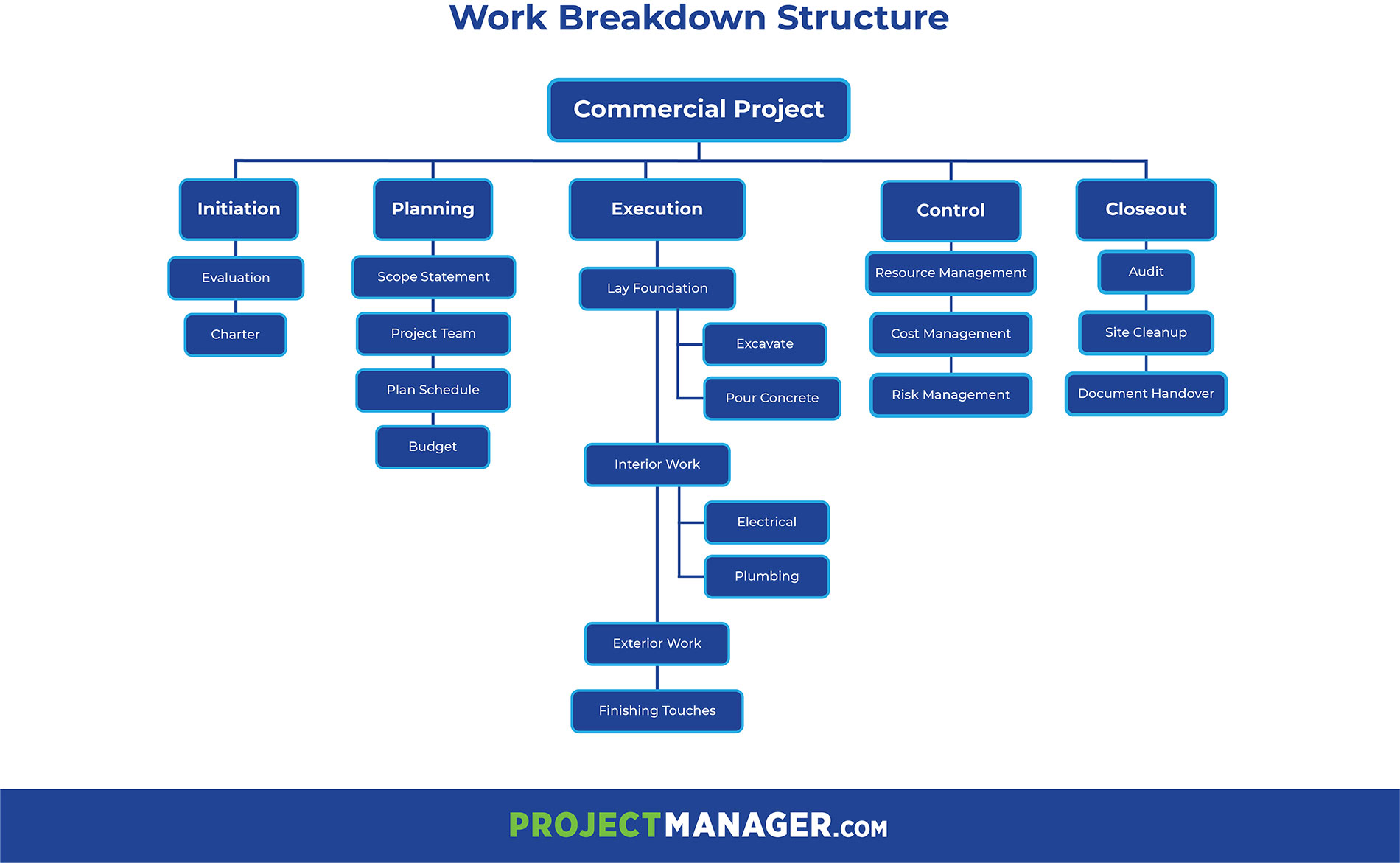
At the top of the work breakdown structure is your final deliverable (in this instance, the construction project). Immediately beneath that is the next WBS level, which are the main project phases required to complete the project. The third and lowest level shows work packages. Most WBS charts have 3 levels, but you can add more depending on the complexity of your projects.
Each of those five project phases—initiation, planning, execution, control and closeout, also act as control accounts and branch off the main deliverable at the top. Once decided, they are then broken down into a series of deliverables. For example, the initiation phase includes site evaluation work and creating the project charter.
You’ll also need a work package to go with each of those project deliverables. In the execution phase in our construction example, we can look at the interior work deliverable. That deliverable is divided into two work packages, which are installing the plumbing and setting up the electricity.
The WBS, when created as thoroughly as possible, is the roadmap to guide you to completion of what would seem to be a very complicated project scope. However, when broken down with a WBS, project planning, scheduling and resource planning suddenly become much more manageable.